Quick answer
The easiest way to pack for an Ottawa move is to start with a dated room-by-room plan, remove items you will not take, and label each sealed box with both its destination room and a short contents list. Pack low-use belongings first, protect fragile items with suitable materials, and keep documents, medication, chargers, and first-night supplies with you. For longer moves, finish packing earlier and make a separate inventory before the truck is loaded.
- Start with decluttering and a written room inventory—not a pile of boxes.
- Mark every carton with a destination room, contents, and handling note.
- Keep medication, ID, keys, chargers, and first-night essentials out of the truck.
- Ask movers in advance about items they cannot pack or transport.
How should you plan packing before buying supplies?
Walk through the home with a notepad or phone and list rooms, storage areas, and items that need special handling. Mark what will move, what will be donated or recycled, what will go into storage, and what you will transport yourself. This first pass prevents paying to pack and move things you already planned to leave behind.
Choose a simple labelling system and use it consistently. Each carton should show the destination room, a brief contents description, and a handling note such as “fragile,” “keep upright,” or “open first.” A numbered box list can add detail without writing a full inventory on every carton. Keep the master list on your phone and save a copy somewhere other than inside the moving truck.
Buy supplies after you know the rough volume and the types of items involved. Small, sturdy cartons work better for dense belongings such as books; larger cartons suit light, bulky items like linens. Use clean cartons that hold their shape, strong packing tape, cushioning material, and specialty protection only where the item calls for it. Oversized boxes packed with heavy objects are hard to lift safely and may fail at the bottom.
If you are hiring movers, ask what packing materials and preparation services are included before purchasing supplies. A professional estimator can identify wardrobe cartons, mattress protection, dish packs, or custom crating needs during a walkthrough. Prestige Moving’s professional packing services in Ottawa are one option for households that want help with selected rooms or a full-home pack; confirm the current service scope directly with the provider.
- Separate keep, donate, recycle, storage, and self-transport items.
- Set one consistent label format before the first carton is sealed.
- Use smaller boxes for dense belongings and larger boxes for light items.
- Confirm the mover’s packing scope before buying specialty supplies.
When should you pack for a local or long-distance move?
For a local move, begin with belongings you will not need before moving day: seasonal decorations, off-season clothing, extra linens, books, display items, and rarely used kitchen equipment. Packing these first makes steady progress without disrupting daily routines. Leave frequently used items accessible until closer to the move.
As move day approaches, work through storage closets, guest rooms, and spare cupboards, then pack most of the kitchen and bedrooms. Keep a small set of dishes, toiletries, clothes, and cleaning supplies for the final days. If you are packing yourself, aim to finish ordinary household packing before the movers arrive; a half-packed home can slow loading and complicate the inventory.
Long-distance moves need more lead time because delivery may not happen the same day as pickup. Pack with the expectation that the truck will travel, items may be handled at multiple stages, and you may need a separate set of essentials for the first night or several days. Do not place urgent medication, work equipment, irreplaceable documents, or keys in a carton that will travel with the shipment.
Use the schedule below as a flexible framework rather than a promise that every home takes the same amount of time. A large home, a family with children, accessibility needs, extensive collections, or a move involving storage can require a different pace. If your date changes, re-order tasks by priority instead of trying to finish every room at once.
What is the best room-by-room packing order?
Start with the rooms and cupboards that have the fewest daily-use items. In bedrooms, pack out-of-season clothing, extra bedding, and décor first; leave a small set of clothing and linens accessible. Use wardrobe cartons for garments that need to remain on hangers, and avoid filling large boxes with heavy books or shoes.
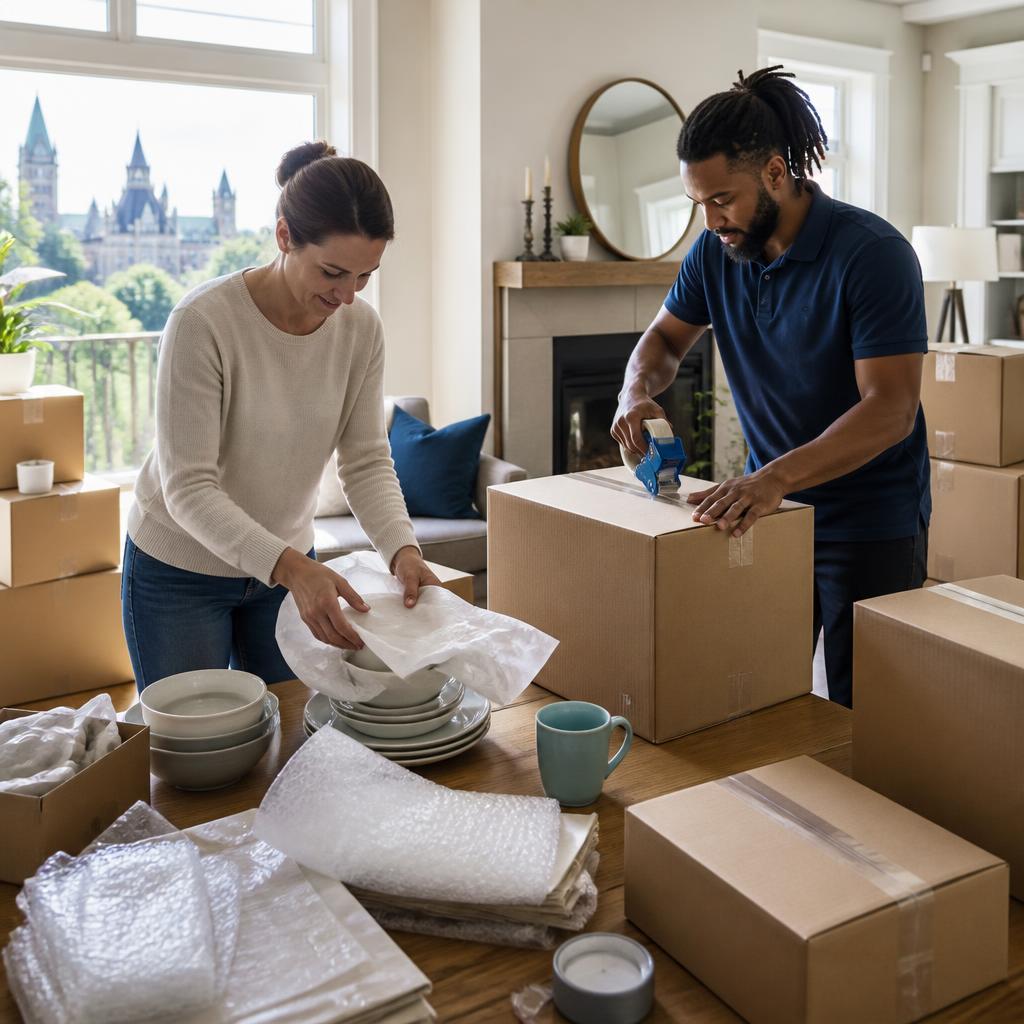
In the kitchen, sort pantry items before packing and set aside open food or anything that should not travel. Wrap plates individually and stack them vertically with cushioning between layers. Protect glassware in fitted dividers or wrapped bundles, and pack knives so sharp edges cannot cut through a carton. Keep one small box of daily essentials separate until the final day.
For living and dining areas, remove loose shelves, secure hardware in labelled bags, and protect table corners and glass surfaces. Photograph complex electronics before disconnecting them, label cables at both ends, and keep remotes with the equipment they operate. Artwork, mirrors, televisions, and unusually shaped pieces may need purpose-made cartons or professional protection.
Bathrooms and cleaning cupboards should be packed near the end because many products are used until moving day. Check product labels before transporting liquids, aerosols, bleach, solvents, or other chemicals. Do not pack anything that the mover says is excluded; arrange safe disposal or carry permitted items yourself. Keep towels, soap, toilet paper, basic tools, and a first-aid kit accessible.

How do you protect fragile items and prepare for Ottawa weather?
Fragile packing begins with a carton that is strong enough for the item and small enough to keep it from shifting. Cushion the bottom, wrap individual pieces, fill empty spaces, and test the closed box gently for movement. Marking a carton “fragile” helps communicate care, but it does not replace correct cushioning or a clear discussion with the mover about high-value items.
Use original packaging when it is intact and provides the manufacturer’s intended protection, especially for electronics. For artwork, mirrors, lamps, musical instruments, antiques, and large glass pieces, ask whether a specialty carton or custom protection is appropriate. Take dated photos of valuable items before packing and keep receipts or appraisals with your records rather than in the shipment.
Ottawa’s winter conditions add practical considerations: wet boots, snow, salt, cold air, and slippery entrances can affect loading and the condition of floors. Clear a path, keep pets and children away from work zones, and arrange floor protection with the moving team. For plants, candles, liquids, and temperature-sensitive goods, check carrier rules and consider whether you should transport them separately.
Do not assume that every household item can be packed into a moving truck. The Canadian government’s pre-move information booklet advises customers to make alternate arrangements for flammable or dangerous goods and to identify items that will not be shipped. Ask your mover for its current prohibited-items list before packing household chemicals, fuel, propane, or other restricted goods.
- Cushion the base and fill voids so contents cannot shift.
- Photograph high-value items and keep proof of value separately.
- Arrange floor protection and safe paths for snow, slush, and salt.
- Check the mover’s restricted-items list before boxing liquids or chemicals.
Should you pack yourself or hire packing services in Ottawa?
DIY packing gives you control over timing and lets you decide how personal items are handled. It can work well when the move is small, you have time, and you can pack consistently. The trade-off is that packing becomes a second project layered onto work, family, and move administration. If packing runs late, it can delay loading or leave fragile items less protected than planned.
Professional packing can be full-service or selective. Some households ask for help only with kitchens, artwork, fragile collections, or a home office; others want the whole home packed and labelled. Ask what materials are used, whether unpacking is available, how the crew identifies cartons, and how the service affects the estimate. Never rely on an assumed inclusion—get the scope in writing.
When comparing a packing-and-moving quote, separate packing labour, materials, specialty protection, unpacking, storage, and transportation. Confirm whether the crew packs closets and drawers, how open food is handled, and what happens when an item is not ready. A clear scope helps you compare providers fairly and decide which tasks you should keep for yourself.
For Ottawa households comparing providers, review our packing services guide, the guide to choosing professional movers, and the Ottawa moving cost guide. Prestige Moving’s homepage also describes its Ottawa moving and packing team; use the same checklist of written scope, schedule, and coverage when evaluating any company.
What should stay with you on moving day?
Prepare an essentials bag or clearly marked tote that does not go on the truck. Include identification, lease or closing documents, keys, medication, phone and laptop chargers, basic toiletries, a change of clothes, snacks, water, and the items children or pets need. For a long-distance move, this personal kit should cover the period until your shipment arrives.
Keep valuables, small electronics, critical paperwork, and irreplaceable personal items under your control whenever practical. If something must travel in the shipment, list it clearly and ask how it will be inventoried and protected. Avoid packing passports, financial documents, jewellery, cash, or essential work credentials in an ordinary carton.
Before the truck leaves, do a final walkthrough of closets, cupboards, storage lockers, balconies, and the garage. Compare the shipment against your room list, confirm any items going to storage, and photograph the condition of the home and large items if useful. At delivery, note missing or damaged items promptly and follow the mover’s written claims process and applicable consumer guidance.
For the next step, use our Ottawa local moving guide for an in-city move or read the long-distance moving guide when your shipment is travelling farther. If you need temporary space between possession dates, our moving and storage guide explains questions to ask before combining services.
Frequently asked questions
How early should I start packing for a move in Ottawa?
Start as soon as your move date is reasonably firm by decluttering, making a room inventory, and packing seasonal or rarely used items. The final pace depends on home size, available time, and whether you are using professional packing services.
What should I pack first when moving?
Pack belongings you will not need before moving day: seasonal decorations, extra linens, books, display items, and rarely used kitchen equipment. Keep daily clothing, medication, documents, chargers, and first-night supplies accessible.
How do I label boxes for movers?
Write the destination room and a brief contents description on at least two sides of each carton. Add handling notes when needed and keep a numbered master list for high-value or important boxes.
Can movers pack cleaning products and household chemicals?
Some liquids, flammable products, aerosols, fuels, and chemicals may be restricted or excluded. Check the moving company’s current prohibited-items policy and arrange safe disposal or separate transport where allowed.
Is professional packing worth it for a local Ottawa move?
Professional packing may be useful when time is limited, the home contains many fragile items, or you want selected rooms packed by a trained crew. Compare a written service scope and materials list with the time and supplies required for DIY packing.
What should I keep with me instead of putting on the moving truck?
Keep identification, keys, medication, valuables, essential documents, chargers, basic toiletries, and first-night supplies with you. For long-distance moves, bring enough clothing and essentials to manage until delivery.